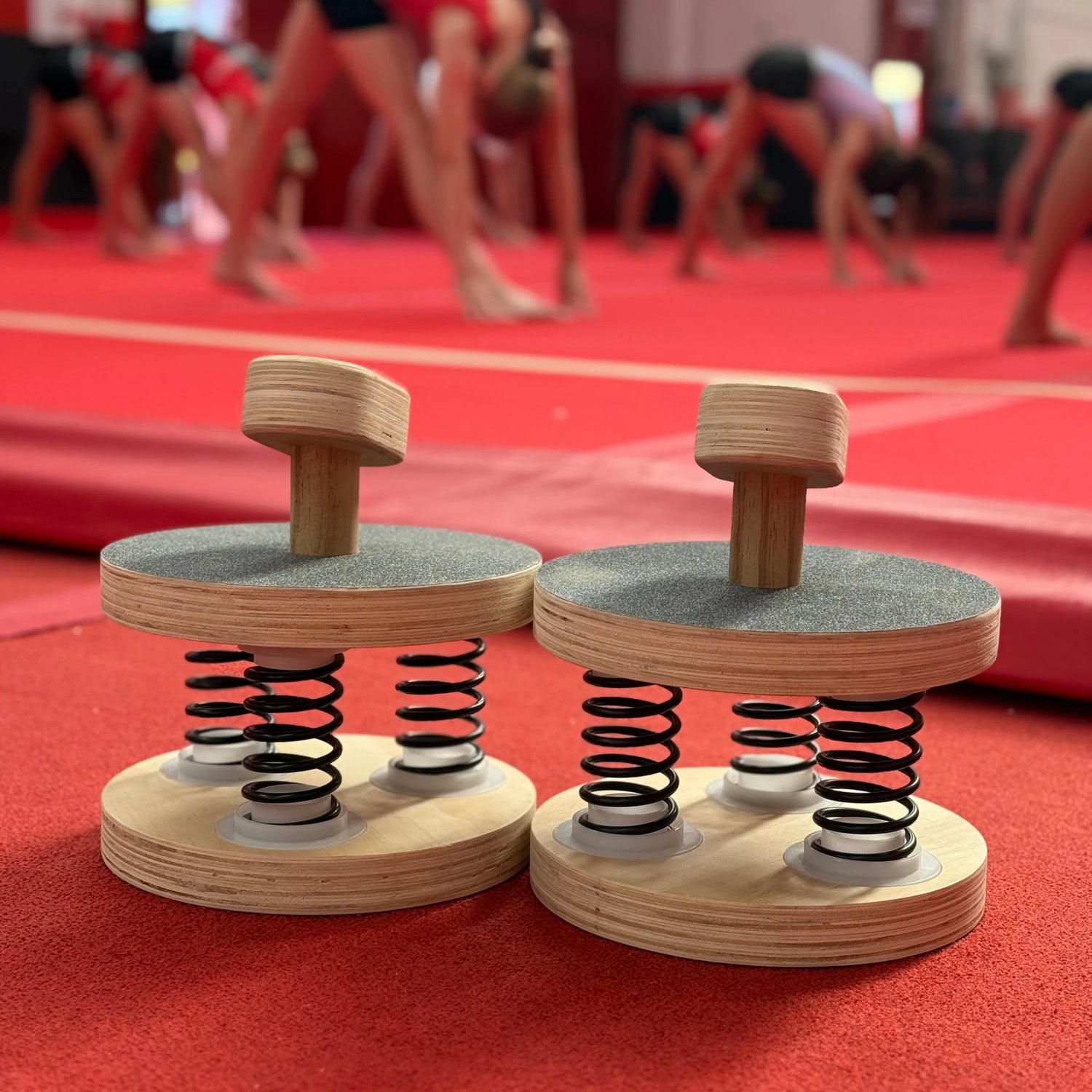
Choosing between parallettes and handstand blocks? Both can earn a place in your training space, but they are not interchangeable. The biggest differences are how you grip them, the exercises you want to practise and the feel you prefer when balancing upside down.
The short answer: choose parallettes for a mix of calisthenics, push-ups, support holds and handstands. Choose handstand blocks if hand balancing is your main focus and you prefer a flat wooden surface with edges to grip. Neither replaces consistent practice or good technique.
What are parallettes?
Parallettes are a pair of raised, parallel bars. You wrap your hands around the handles rather than place your palms flat on the floor. They are used for bodyweight exercises such as push-ups, support holds, L-sit progressions and handstands.
Height, handle diameter and base design vary between models, so check the actual equipment rather than assuming every pair offers the same clearance or feel.
What are handstand blocks?
Handstand blocks are separate platforms that provide a flat surface for each hand. Depending on their size and your hand position, you can place your palm on top and use your fingers around the edges to adjust your balance.
They offer a different contact surface from both the floor and a rounded bar. For hand balancers, learning how to apply pressure through the palm and fingers on blocks is a skill in its own right.
The Balance Addicts wooden handstand blocks are designed for gymnastics, yoga and calisthenics training, with four non-slip pads provided for each block. Always check that the pads are correctly fitted and that the training surface is suitable.
Parallettes vs handstand blocks: the key differences
1. Grip and wrist position
On parallettes, your fingers wrap around a rounded handle. This generally allows a less extended wrist position than placing your palms flat on the floor. Some people prefer that position, but comfort is individual: bars are not a treatment for wrist pain.
On blocks, the hand rests on a flat top, with finger placement influenced by the block dimensions. This creates a different balancing feel. Do not assume blocks will remove wrist loading or make an uncomfortable movement suitable.
2. Exercise variety
Parallettes are a practical choice if you want one pair of handles for several types of bodyweight training. You can use them for controlled push-ups, supported holds and appropriate L-sit progressions, as well as handstands when you have the necessary skill.
Handstand blocks make sense when your sessions centre on hand balancing. They can also be used for suitable support exercises, but the clearance and contact area may differ from bars. Match the movement to the equipment's dimensions and intended use.
3. Balance technique
A handstand on bars feels different from a handstand on blocks or the floor. The contact points and the way you make small corrections change, so expect an adjustment period when switching equipment.
If floor handstands are your goal, keep floor practice in your programme. If you want to become confident on blocks, practise on blocks. Equipment can broaden your training, but improvement on one surface does not automatically mean identical control on another.
4. Setup and stability
Both options need a level surface, adequate grip and consistent placement. A steel base or non-slip pads can be useful design features, but neither guarantees stability on every floor.
Check the equipment before each session, test it with a controlled supported movement and leave enough clear space to exit safely. Do not stack blocks or raise equipment on improvised supports.
Which should beginners choose?
Being a beginner does not make one option automatically right for you. Start with the exercises you can already perform safely and the skills you want to develop.
If your goal is broader calisthenics training, parallettes are our first pick for their rounded grip and range of uses. If your goal is specifically hand balancing on wooden blocks, blocks are the more direct choice.
You do not need to attempt a freestanding handstand to start using either tool. Begin with suitable supported exercises, and seek coaching before progressing to movements you cannot control.
Do you need both?
Not straight away. Pick the equipment that matches your main training goal and get comfortable with it before adding more.
Over time, using both can introduce different grips and training options. A mixed programme might use parallettes for strength work and blocks for dedicated balancing practice. The value comes from a clear purpose, not simply owning more kit.
A few safety essentials
- Check the equipment's condition, grip surfaces and setup before loading it.
- Use a level, suitable surface and keep your practice area clear.
- Build up gradually and learn a safe exit before unsupported handstand attempts.
- Stop if a movement causes pain. Persistent or recurring pain warrants advice from a qualified healthcare professional.
- For children, choose age-appropriate exercises with suitable supervision and coaching.
The verdict
Choose parallettes for versatile bodyweight strength training with a rounded handle. Choose handstand blocks for focused hand balancing on a flat wooden platform.
The best option is the one that suits your current ability, preferred grip and next training goal.