Whether you're a complete beginner or you've been training for a while and feel like you've hit a plateau, improving at gymnastics takes more than just putting in the hours. It takes smart, consistent, focused training — and a few key habits that the best gymnasts swear by.
Here are 7 training tips that will genuinely accelerate your progress, whatever your current level.
1. Train Consistently, Not Intensively
One of the biggest mistakes gymnasts make — especially beginners — is training hard for a few days and then taking a week off. Gymnastics is a skill sport, which means your nervous system needs regular, repeated exposure to movements to build the coordination and muscle memory required to perform them well.
Three to four shorter sessions per week will always outperform one or two long, exhausting ones. Aim for consistency above all else — even 20-30 minutes of focused practice every day will produce faster results than sporadic intense sessions.
2. Master the Basics Before Moving On
It's tempting to jump ahead to the exciting skills — back handsprings, one-arm handstands, aerial cartwheels — but rushing past the fundamentals is the single biggest thing holding most gymnasts back.
Every advanced skill is built on a foundation of basic movements. A solid forward roll leads to a better cartwheel. A strong cartwheel leads to a better round-off. A perfect round-off leads to a better back handspring. Invest time in getting your basics truly dialled in and everything else will come faster.
3. Use the Right Equipment
Training with the right equipment doesn't just make sessions more enjoyable — it actively accelerates your progress by allowing you to train more safely, more comfortably, and for longer.
A few essentials worth investing in:
- Handstand blocks — reduce wrist pressure and improve grip, allowing you to hold handstands longer and train more frequently. Our Balance Addicts Handstand Blocks are a brilliant starting point
- Handstand canes — once you're ready to progress beyond blocks, canes open up a whole new range of training possibilities. Our Balance Addicts Pro Mini Handstand Canes are compact and perfect for home training
- Ankle weights — a simple but highly effective conditioning tool for building the leg strength that underpins almost every gymnastics skill. Our Balance Addicts Gymnastics Ankle Weights are comfortable and easy to use
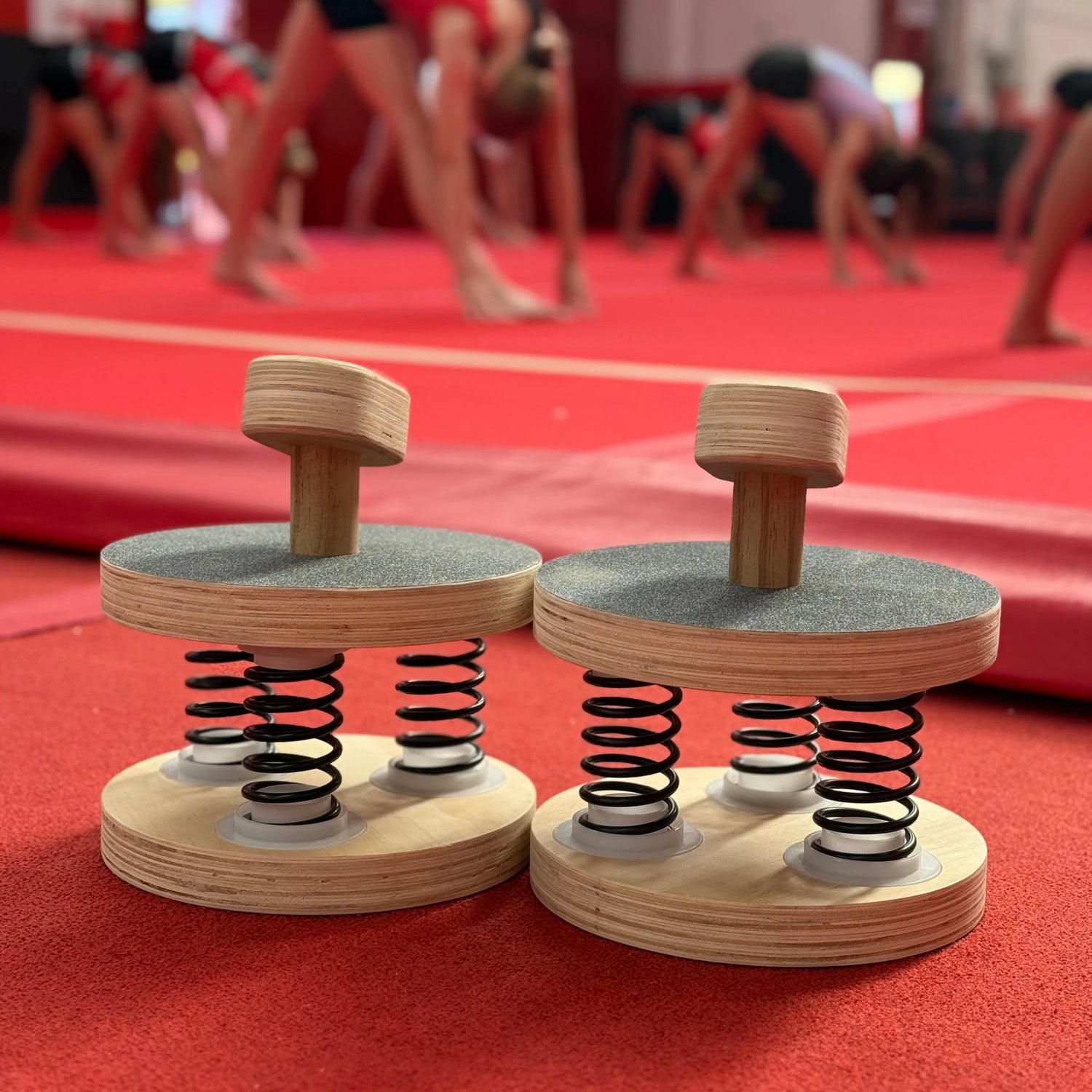
- Wobble blocks — once your handstand is solid, wobble blocks challenge your balance on an unstable surface, rapidly improving your proprioception and core control. Check out our Balance Addicts Handstand Wobble Blocks
4. Film Yourself Training
This is one of the most underused tools in a gymnast's arsenal, and it's completely free. Filming your training sessions gives you an objective view of what your body is actually doing — which is often very different from what it feels like you're doing.
Watch your footage back after each session and look for specific things: are your arms straight in your handstand? Are your hips square in your cartwheel? Is your bridge high enough? Identifying these details visually is far more effective than trying to feel your way to improvement.
5. Work on Flexibility Every Single Day
Flexibility is one of the most important physical qualities in gymnastics, and it responds best to daily, consistent work. Unlike strength, which needs rest days to develop, flexibility training can — and should — be done every day.
Even 10-15 minutes of stretching before bed will produce noticeable improvements within a few weeks. Focus on the areas that matter most for your goals: hip flexors and hamstrings for splits, shoulders and thoracic spine for bridges and back walkovers, and wrists for handstand work.
6. Find a Focus Point
Balance is as much a mental skill as a physical one. One of the simplest and most effective techniques for improving your handstand balance is finding a fixed focus point — a spot on the floor or wall that you stare at without moving your eyes.
This gives your vestibular system a stable reference point, which dramatically improves your ability to hold your position. Try it in your next session and you'll notice the difference immediately.
7. Rest and Recover Properly
Progress in gymnastics doesn't happen during training — it happens during recovery. Sleep, nutrition, and rest days are just as important as the sessions themselves.
Make sure you're:
- Getting at least 7-8 hours of sleep per night
- Eating enough protein to support muscle repair and growth
- Taking at least one full rest day per week
- Listening to your body — training through pain is never worth it
The gymnasts who improve fastest aren't the ones who train the hardest. They're the ones who train the smartest — and that includes knowing when to rest.
The Bottom Line
Getting better at gymnastics faster comes down to consistency, smart training, the right equipment, and a willingness to focus on the details. Apply these seven tips to your training and you'll be amazed at how quickly things start to click.
At Balance Addicts, we've got everything you need to support your gymnastics journey. Take a look at our full range at balanceaddicts.com and find the tools that will help you train smarter and progress faster.
Now get out there and train! 💪🤸