Why Strength Training Matters in Gymnastics
Gymnastics is one of the most physically demanding disciplines in the world. It requires not just flexibility and coordination, but exceptional strength — particularly through the shoulders, core, wrists, and hips. Without a solid strength foundation, skill development stalls and injury risk rises.
The good news is that gymnastics-specific strength training doesn't require a fully equipped gym. Many of the most effective exercises are bodyweight-based and can be done at home with minimal equipment.
The Key Muscle Groups for Gymnasts
Before diving into exercises, it helps to understand which areas matter most:
- Core: The foundation of almost every gymnastics skill — from handstands to tumbling to holds.
- Shoulders and upper back: Essential for pressing, supporting bodyweight overhead, and controlling handstand lines.
- Wrists and forearms: Often overlooked, but critical for load-bearing skills like handstands and floor work.
- Hips and glutes: Drive power in jumps, leaps, and tumbling, and stabilise the lower body in holds.
- Legs: Provide the explosive power for vaults, jumps, and dynamic skills.
Core Exercises Every Gymnast Should Train
1. Hollow Body Hold
The hollow body position is the foundation of gymnastics movement. Lying on your back, press your lower back into the floor, lift your shoulders and legs, and hold a curved "banana" shape. Start with 20-second holds and build to 60 seconds.
Why it matters: This position transfers directly into handstands, bars, and floor skills. If your hollow is weak, your handstand line will break.
2. Arch Hold (Superman)
The counterpart to the hollow body. Lying face down, lift your arms, chest, and legs off the floor simultaneously and hold. Aim for 20–45 seconds.
Why it matters: Develops the posterior chain — glutes, lower back, and upper back — which is essential for controlled arching skills and back flexibility.
3. Pike Compression
Sit on the floor with legs straight out in front. Without bending your knees, actively pull your chest towards your thighs using your hip flexors and core. Hold for 2–3 seconds, release, and repeat for 10–15 reps.
Why it matters: Builds the active flexibility and compression strength needed for straddle presses, pike holds, and L-sits.
4. Handstand Wall Holds
Kick up to a handstand against the wall and hold for time, focusing on a tight hollow body position, active shoulders (push the floor away), and pointed toes. Build from 20 seconds to 60+ seconds.
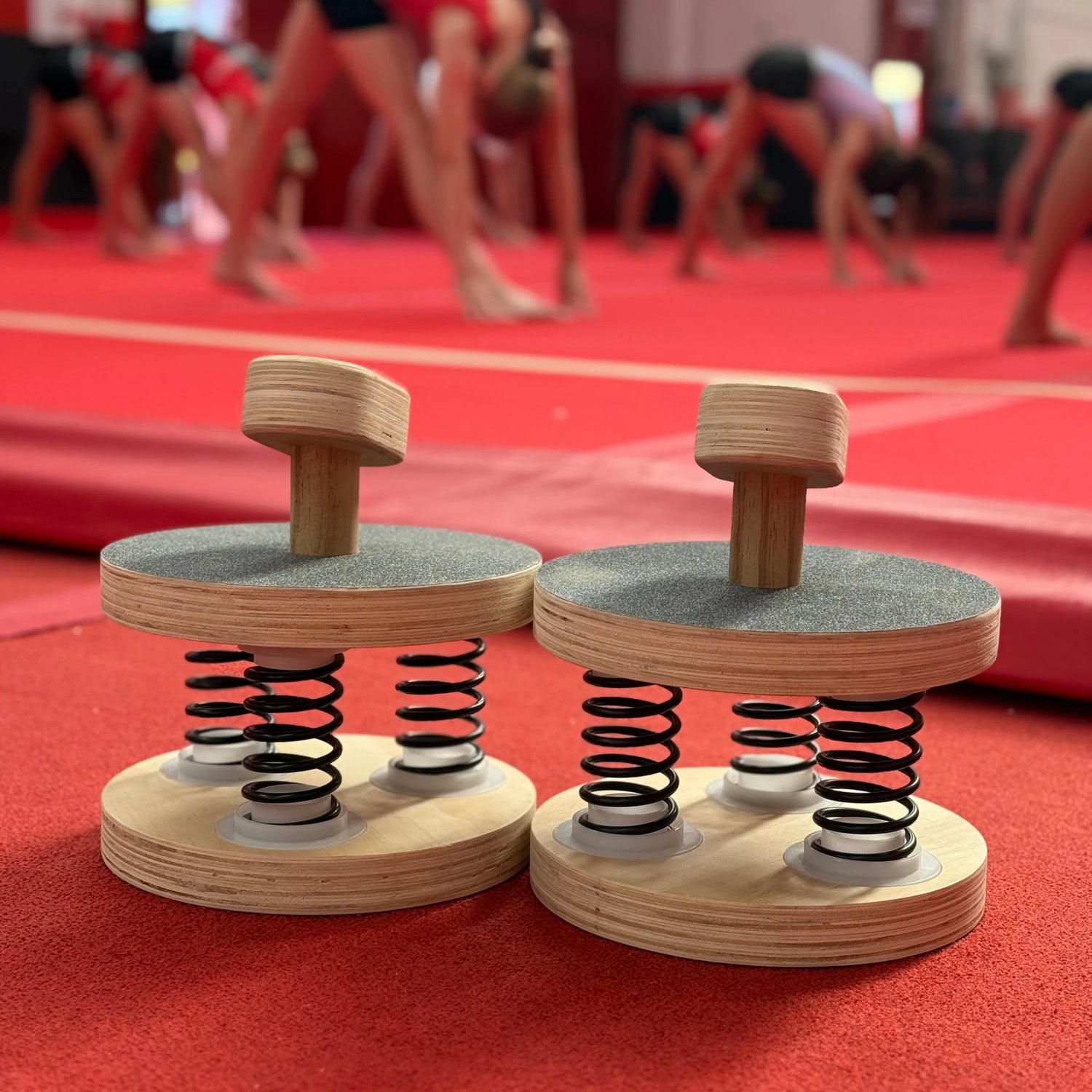
Why it matters: Develops shoulder endurance and proprioception in the inverted position. Using handstand blocks elevates your hands, increases wrist comfort, and allows a deeper shoulder stretch — making this exercise significantly more effective.
5. Scapular Push-Ups
In a plank position with arms straight, let your shoulder blades pinch together (without bending the elbows), then push them apart as far as possible. Repeat for 15–20 reps.
Why it matters: Builds serratus anterior strength, which is critical for the "pushing the floor away" action in handstands and press work.
6. Single-Leg Squat (Pistol Squat Progression)
Stand on one leg and lower yourself as far as you can with control, keeping the other leg extended in front. Use a box or chair for assistance initially. Build towards a full pistol squat over time.
Why it matters: Develops unilateral leg strength and balance — essential for landings, leaps, and any skill requiring single-leg stability.
7. L-Sit Hold
From a seated position, place your hands beside your hips and press the floor away to lift your body, holding your legs straight out in front. Start with tuck holds and progress to full L-sit. Aim for 3 × 10–20 second holds.
Why it matters: One of the best compound exercises for gymnasts — it trains shoulder depression, core compression, and hip flexor strength simultaneously.
8. Loaded Ankle Work
Adding ankle weights to leg raises, flutter kicks, and hollow body holds increases the demand on your hip flexors and core — accelerating strength gains without adding complexity. Start light and focus on maintaining perfect form throughout.
How to Structure Your Strength Training
For most home gymnasts, 3–4 strength sessions per week is optimal. A simple structure:
- Warm-up (10 min): Joint mobility, wrist circles, shoulder rotations, light cardio
- Skill-specific strength (20–25 min): Choose 4–5 exercises from the list above, 3 sets each
- Conditioning (10 min): Hollow/arch holds, pike compression, L-sit work
- Cool-down (5–10 min): Static stretching, shoulder and hip flexibility
Rotate your exercise selection across sessions to ensure balanced development and avoid overuse injuries.
Progression Is Everything
Gymnastics strength training is built on progressive overload — gradually increasing difficulty as your body adapts. This might mean holding a position for longer, adding ankle weights, moving from two legs to one, or progressing from a tuck to a pike to a straight-leg variation.
Track your holds and reps, and aim to improve something each week. Small, consistent gains compound into significant strength over months of training.
Final Thoughts
Gymnastics strength isn't built in a single session — it's the result of consistent, targeted work over time. Start with the fundamentals: hollow body, handstand holds, scapular strength, and core compression. Build from there, add equipment like handstand blocks and ankle weights as you progress, and you'll develop the kind of functional strength that underpins every gymnastics skill.
Ready to build your home training setup? Explore the Ultimate Gymnastics Bundle — everything you need to train seriously at home.