Starting your gymnastics journey is one of the most exciting decisions you can make. Whether you're training at home, joining a club, or just looking to improve your strength, flexibility, and coordination — gymnastics has something incredible to offer everyone. But with so many skills to learn, where do you actually begin?
We've put together this beginner's guide to help you focus on the five foundational skills that will set you up for long-term success. Master these, and everything else becomes so much easier!
Before You Start: A Few Important Tips
- Always warm up before training — 5-10 minutes of light cardio and dynamic stretching goes a long way in preventing injuries
- Train on a safe, non-slip surface with adequate space around you
- Progress at your own pace — gymnastics is a journey, not a race!
1. The Forward Roll
The forward roll is the very first skill most gymnasts learn, and for good reason. It teaches you how to move your body through space safely, builds spatial awareness, and introduces the concept of tucking and rolling — a skill that underpins many more advanced movements.
How to do it:
- Start in a standing position with your feet shoulder-width apart
- Bend your knees and place your hands flat on the floor in front of you, shoulder-width apart
- Tuck your chin to your chest and push off with your feet
- Roll forward over your shoulders (not your head!) and tuck your knees into your chest
- Use your momentum to roll up to a standing position
Top tip: Practicing on a cushioned, non-slip surface makes the roll much more comfortable and gives you the confidence to really commit to the movement. A dedicated gymnastics balance mat is a worthwhile addition to any home training setup.
2. The Cartwheel
Once you've got your forward roll down, the cartwheel is your next big milestone. It's a lateral movement that builds shoulder strength, coordination, and body awareness — all essential for more advanced gymnastics skills.
How to do it:
- Stand sideways with your dominant foot forward
- Raise your arms above your head and lunge forward onto your dominant foot
- Place your hands on the floor one at a time (dominant hand first), keeping them shoulder-width apart
- Kick your legs up and over in a wide arc, landing one foot at a time
- Finish in a standing position facing the opposite direction
Top tip: Draw a straight line on the floor and try to keep your hands and feet on it throughout the cartwheel. This helps you stay aligned and balanced.
3. The Handstand
No gymnastics journey is complete without the handstand — and it's more achievable than most beginners think! Handstands build incredible upper body and core strength, improve your balance, and open the door to a huge range of advanced skills.
How to do it:
- Start facing a wall, about an arm's length away
- Place your hands flat on the floor, shoulder-width apart, fingers spread wide
- Kick one leg up towards the wall, followed by the other
- Hold the position with straight arms, squeezing your core, glutes, and legs together
- Use the wall for support until you feel confident enough to try freestanding
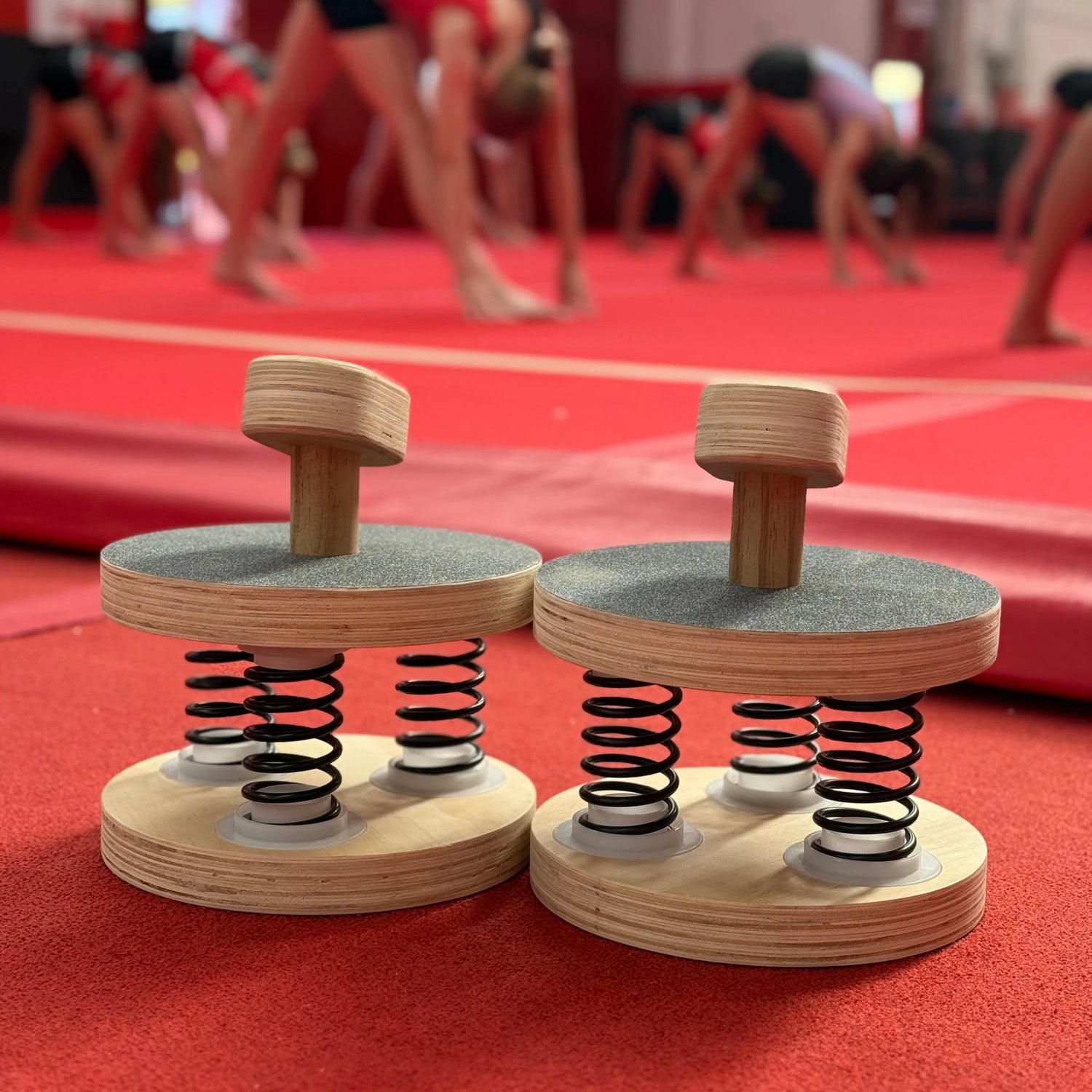
Top tip: Using handstand blocks can make a real difference to your training. They reduce pressure on your wrists and give you a better grip, allowing you to hold your handstand for longer and train more comfortably. Check out our Balance Addicts Handstand Blocks for a great beginner-friendly option.
4. The Bridge
The bridge is a fundamental flexibility and strength exercise that forms the foundation of back walkovers, back handsprings, and many other gymnastics skills. It stretches the spine, opens the chest and shoulders, and strengthens the arms, legs, and core simultaneously.
How to do it:
- Lie on your back with your knees bent and feet flat on the floor, hip-width apart
- Place your hands flat on the floor beside your ears, fingers pointing towards your shoulders
- Press through your hands and feet to lift your hips and chest off the floor
- Straighten your arms as much as possible and hold the position
- Lower yourself back down slowly and with control
Top tip: If you're struggling to push up into a full bridge, start by practising chest stretches and shoulder flexibility exercises daily. Flexibility takes time — be patient with yourself!
5. The Split
Flexibility is at the heart of gymnastics, and the split is one of the most iconic flexibility goals for any beginner. Beyond looking impressive, splits improve your hip flexibility, hamstring length, and overall range of motion — all of which make every other gymnastics skill easier.
How to do it:
- Start in a lunge position with your front leg extended forward and your back knee on the floor
- Slowly slide your front foot forward and your back foot backward, lowering your hips towards the floor
- Keep your hips square and your core engaged throughout
- Hold the position for 20-30 seconds, breathing deeply
- Repeat on both sides
Top tip: Consistency is everything with splits. Even 10 minutes of flexibility training every day will produce noticeable results within a few weeks. Gymnastics ankle weights can also help build the leg strength that supports your flexibility work.
What's Next?
Once you've got these five skills feeling solid, you'll be ready to progress to more exciting movements like back walkovers, round-offs, and handstand forward rolls. The key is to build a strong foundation — rushing ahead without mastering the basics is the most common mistake beginners make.
At Balance Addicts, we've got everything you need to support your gymnastics journey — from handstand blocks and canes to chalk and ankle weights. Take a look at our full range and find the tools that will help you train smarter and progress faster.
The most important thing? Enjoy every step of the journey. Gymnastics is one of the most rewarding sports in the world — and it all starts with these five skills. You've got this! 💪