Why Spotting Matters — and Why It's Easy to Get Wrong
When your child is learning gymnastics at home, your instinct as a parent is to keep them safe. Spotting — physically supporting your child through a skill — is one of the most valuable things you can do. But done incorrectly, spotting can actually increase the risk of injury, create bad habits, or make your child dependent on your help rather than building their own strength and confidence.
This guide walks you through how to spot the most common gymnastics skills safely, what mistakes to avoid, and when to step back entirely.
The Golden Rules of Spotting
Before we get into specific skills, these principles apply to every spot you give:
- Never spot a skill you don't understand. If you're unsure what the correct body position looks like, watch the skill performed correctly first.
- Communicate before every attempt. Tell your child exactly what you're going to do and where you'll place your hands.
- Support, don't carry. Your job is to guide and catch — not to do the skill for them. Over-spotting prevents them from developing the strength they need.
- Stay close but don't hover. Be in position before they start, not scrambling to catch up.
- Know when to stop. If your child is tired, frustrated, or in pain, end the session. Fatigue is when injuries happen.
How to Spot Key Skills
Forward Roll
The forward roll is usually one of the first skills children learn, but poor technique can strain the neck.
- Kneel beside your child at their shoulder level
- Place one hand on the back of their head to guide it tucked to their chest
- Use your other hand on their lower back to help them roll through smoothly
- Do not push — guide the momentum gently
Cartwheel
Cartwheels require good shoulder strength and coordination. Many children collapse through the middle.
- Stand behind and slightly to the side of your child
- Place both hands on their hips as they kick up
- Help them stay tall through the middle — resist the urge to catch them if they wobble; let them feel the balance
- As they improve, reduce how much you hold and just shadow their movement
Handstand
Handstands are where spotting is most critical — and most commonly done wrong.
- Stand facing your child as they kick up to the wall or freestanding
- Place both hands firmly on their hips or waist — never grab ankles, as this can cause them to arch and strain their lower back
- Help them find vertical by gently adjusting their hips over their shoulders
- Use a non-slip balance mat under their hands to prevent slipping
- Once they can hold for 3–5 seconds consistently, begin reducing your support
Back Walkover / Bridge
This is a higher-risk skill that requires good spinal flexibility. Do not attempt to spot this skill at home unless your child already has a solid bridge and is working with a coach.
- If supporting a bridge, kneel beside them and place one hand under their lower back
- Never push down on their hips or force the arch deeper
- For back walkovers, this skill should ideally be introduced by a qualified gymnastics coach first
Common Spotting Mistakes to Avoid
- Grabbing the ankles during a handstand — this forces an arch and puts pressure on the lower back
- Spotting from too far away — you won't be able to react in time if they fall
- Spotting every single rep — your child needs to develop their own proprioception and strength
- Spotting when you're distracted — full attention, every time
- Continuing when your child says stop — always respect their signal
Equipment That Makes Home Training Safer
Good equipment reduces the need for constant spotting by giving your child a safer environment to explore skills independently:
- A non-slip balance mat under the hands prevents slipping during handstands and floor work
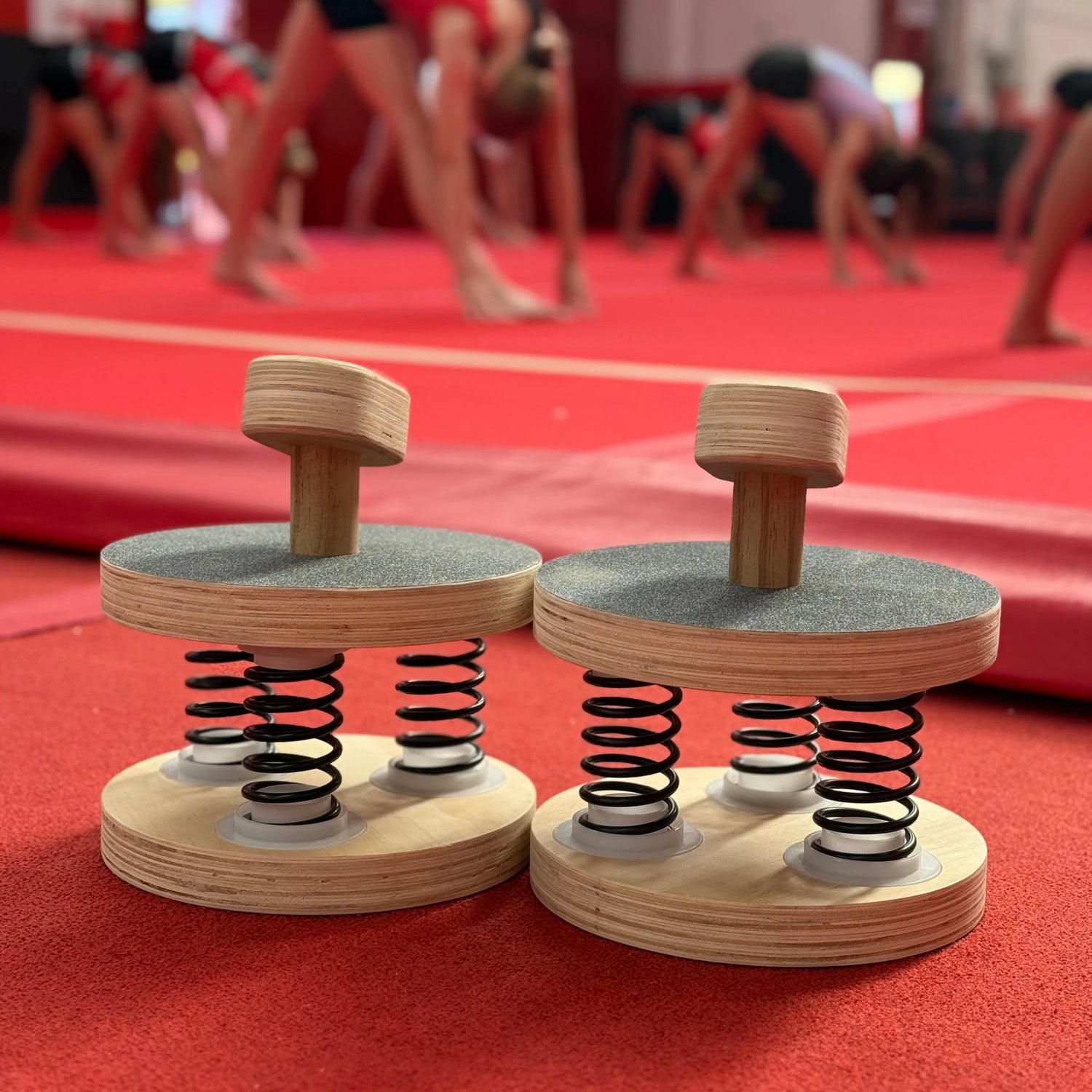
- Handstand blocks raise the hands slightly and reduce wrist strain, making it easier for children to find their balance point
- Ankle weights (used carefully and only for appropriate ages) can help develop the body awareness needed for straight, controlled lines
When to Step Back and Let Them Try Alone
The goal of spotting is to make itself unnecessary. Watch for these signs that your child is ready to try independently:
- They can hold the skill for several seconds with minimal support from you
- They're asking you to let go
- Their technique looks consistent across multiple attempts
- They're not showing signs of fear or hesitation
When they're ready, step back — but stay close. Let them feel the success of doing it themselves. That moment of independent achievement is what builds long-term confidence in the sport.
Final Thought
The best thing you can do as a parent isn't to catch every fall — it's to create the conditions where your child can safely learn to catch themselves. Spot with intention, communicate clearly, and trust the process.
Looking for equipment to support safe home gymnastics training? Browse The Handstand Collection designed for home use.