More and more young cheerleaders are practising at home between squad sessions — and with the right setup and approach, that's a great thing. Home practice builds consistency, confidence, and conditioning. But cheerleading stunts carry real risks if they're not approached carefully, especially outside of a coached environment.
This guide is for parents who want to support their child's cheerleading training at home without compromising on safety.
What Can (and Can't) Be Practised at Home
It's important to be realistic about what's appropriate for unsupervised home practice. As a general rule:
- Safe at home: Conditioning, flexibility, jumps, basic tumbling on a mat, handstand work, strength training, and stunt preparation drills
- Only with proper supervision and spotting: Partner stunts, basing, flying, and any inverted skills
- Not recommended at home: Full pyramid work, basket tosses, or any advanced aerial skills
The goal of home practice should be to build the strength, technique, and body awareness that makes coached sessions more productive — not to replicate the full squad environment without the safety net.
The Role of a Stunt Stand
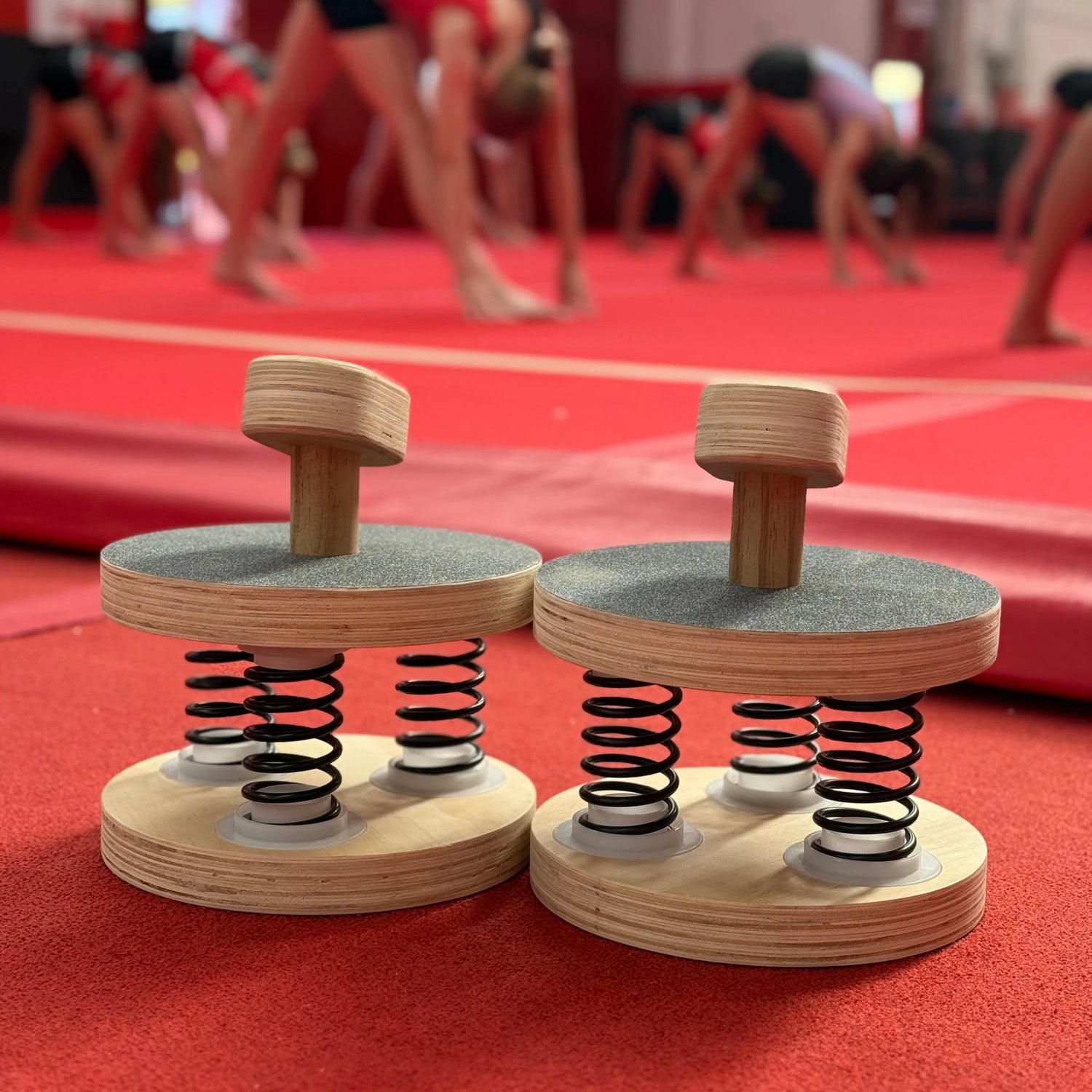
One of the most valuable tools for home cheerleading practice is a stunt stand. A stunt stand allows a flyer to practise balance, body position, and aerial awareness at a controlled height — without needing a full base team.
Our Balance Addicts Personalised Cheerleading Stunt Stand is designed specifically for this purpose. It gives flyers a stable platform to work on their technique, build confidence at height, and develop the core control needed for clean, consistent stunts.
Stunt stands are particularly useful for:
- Practising liberty and torch positions
- Building single-leg balance and core stability
- Developing aerial body awareness safely
- Conditioning the ankles and hips for stunt work
Conditioning: The Foundation of Safe Stunting
Most cheerleading injuries happen because athletes don't have the underlying strength to support the demands of the skill. Home conditioning is one of the best things a young cheerleader can do to reduce injury risk and improve performance.
Key areas to focus on:
- Core strength: Planks, hollow body holds, and V-sits build the tension needed for clean lines in the air
- Leg strength: Squats, lunges, and single-leg work for bases; calf raises and balance work for flyers
- Shoulder stability: Press-ups, shoulder taps, and handstand work for bases and flyers alike
- Flexibility: Hip flexors, hamstrings, and thoracic mobility for cleaner positions and safer landings
Light ankle weights are a great addition to conditioning sessions — they add resistance to leg exercises and help build the strength and body tension that transfers directly to stunt performance.
Setting Up a Safe Home Practice Space
Before your child starts practising at home, take a few minutes to assess the space:
- Clear the area: Remove furniture, sharp edges, and anything that could cause injury in a fall
- Use a mat: A non-slip mat provides cushioning and reduces the risk of slipping during jumps and tumbling
- Check the ceiling height: For any jump or stunt work, make sure there's adequate clearance above
- Supervise: Younger children should always have a parent present during home practice, especially for any stunt-related work
When to Step In as a Parent
It can be hard to know when to intervene and when to let your child push their limits. A few signs that it's time to pause and reassess:
- They're attempting skills they haven't been cleared for by their coach
- They're practising partner stunts without adequate spotting
- They're showing signs of fatigue but pushing through anyway
- They've had a fall or near-miss and want to immediately retry the skill
Encourage your child to communicate with their coach about what's appropriate for home practice. Most coaches are happy to give guidance on what to work on between sessions.
Final Thoughts
Home cheerleading practice, done right, is a genuine competitive advantage. The athletes who put in consistent work between sessions are the ones who progress fastest — but only when that work is safe, structured, and appropriate for their level.
Invest in the right equipment, create a safe space, and keep the lines of communication open with your child's coach. That combination will do more for their cheerleading than any amount of unsupervised stunt attempts.
Questions about the right equipment for your child's training? Browse our full range or get in touch — we're always happy to help.