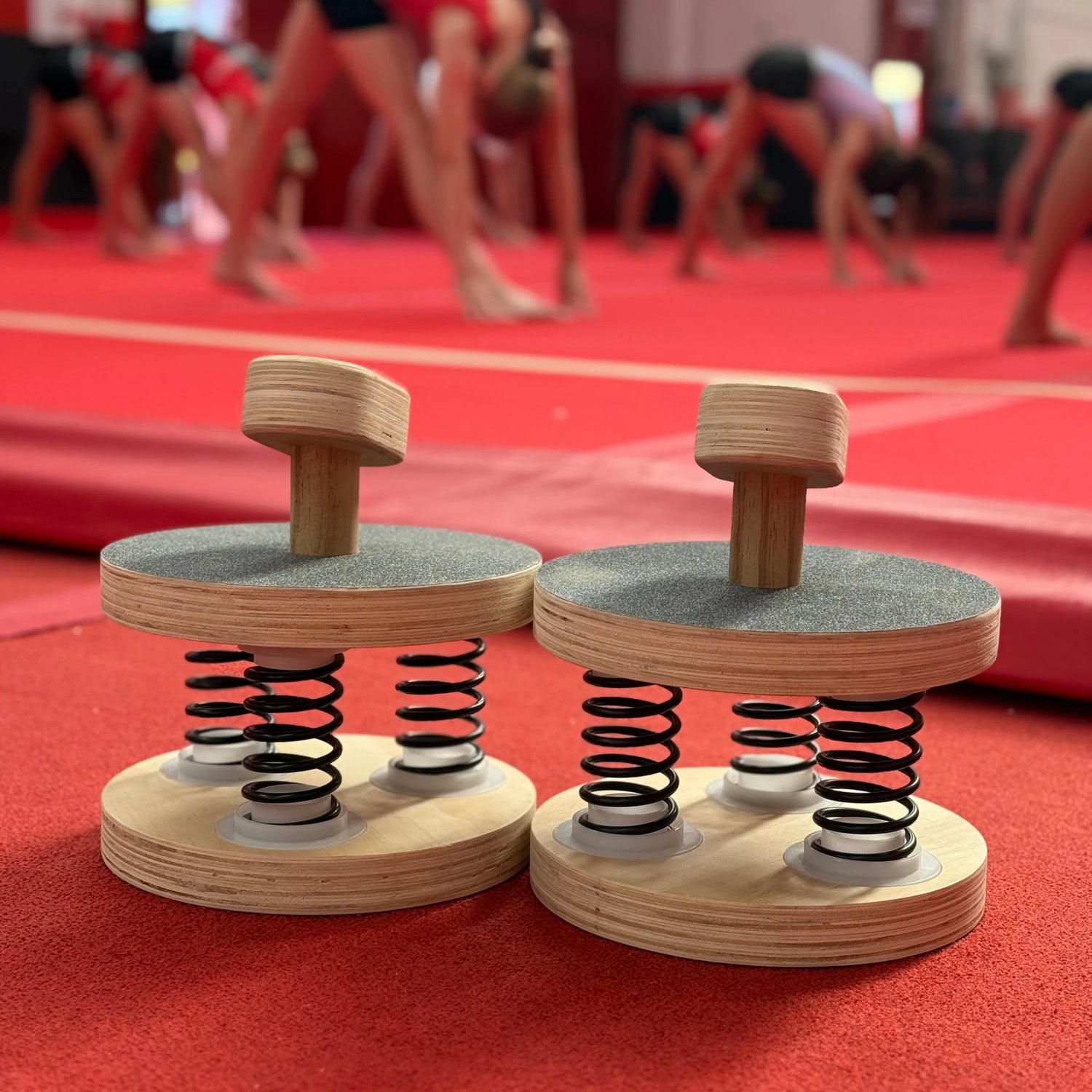
If you're looking to improve your balance, stability, and proprioception at home, you've probably come across both wobble boards and wobble blocks. They look similar on the surface, but they serve quite different purposes — and choosing the wrong one can mean slower progress or equipment that doesn't match your goals.
Here's a clear breakdown of both so you can make the right call.
What Is a Wobble Board?
A wobble board is a flat circular or rectangular platform that sits on a rounded base, creating an unstable surface when you stand on it. They're commonly used in physiotherapy and general fitness for ankle rehabilitation, core activation, and basic balance training. You stand on them with both feet and shift your weight to keep the board level.
Wobble boards are great for:
- Ankle and knee rehabilitation
- General proprioception training for beginners
- Standing desk balance work
- Low-intensity stability exercises
The limitation is that they're primarily a two-footed, standing tool. They don't translate well to gymnastics, handstand training, or upper-body skill work.
What Are Wobble Blocks?
Wobble blocks are a more specialised piece of equipment designed specifically for handstand and gymnastics training. Rather than standing on them with your feet, you place your hands on them — and the instability challenges your wrists, shoulders, and core in a way that directly transfers to handstand skill development.
Our Balance Addicts Handstand Wobble Blocks are engineered for exactly this purpose. The wobble element forces constant micro-adjustments through the hands and fingers, building the proprioception and shoulder stability that's essential for a solid, controlled handstand.
If you want to take your training further, the Wobble Block Training Kit gives you everything you need to progress systematically, and the Pink Wobble Blocks are a popular option for those who want the same performance in a different colourway.
Wobble blocks are great for:
- Handstand balance and control
- Wrist and shoulder proprioception
- Gymnastics and calisthenics skill development
- Progressing from static handstands to freestanding holds
- Upper-body stability training
Key Differences at a Glance
| Wobble Board | Wobble Blocks | |
|---|---|---|
| Primary use | Foot/ankle balance | Hand/wrist balance |
| Best for | Rehab, general fitness | Gymnastics, handstands, calisthenics |
| Body position | Standing upright | Inverted / handstand |
| Skill transfer | Low for gymnastics | High for gymnastics |
| Suitable for kids | Yes | Yes (with supervision) |
Which Should You Choose?
The answer depends entirely on your goal:
- If you're recovering from an ankle injury or want general balance training — a wobble board is a solid, low-cost option widely available from fitness retailers.
- If you're training handstands, gymnastics, or calisthenics — wobble blocks are the clear choice. A wobble board won't help you improve your handstand; wobble blocks will.
- If you want both — start with wobble blocks. The upper-body proprioception and core control you develop will benefit your overall balance training far beyond what a wobble board alone can offer.
A Note on Progression
If you're new to handstand training, it's worth starting with standard Handstand Blocks to build your base technique before moving to wobble blocks. The wobble element adds a significant challenge — it's most effective once you can hold a wall handstand consistently and are working towards a freestanding hold.
Not sure where you sit in your training? Browse our full range and find the right starting point for your level.