Why Handstands Are More Than Just a Party Trick
If your child has come home from gymnastics class desperate to practise their handstand, you're not alone. Handstand training builds incredible strength, body awareness, coordination, and confidence — skills that benefit children far beyond the gym floor. The good news? With a little guidance, you can create a brilliant training environment right at home.
1. Create a Safe Practice Space
Before anything else, safety comes first. Clear a space in your living room, garden, or garage that gives your child room to kick up and come down without hitting furniture or walls. A soft gymnastics mat is essential — it protects wrists, shoulders, and knees during practice and gives your child the confidence to try again when they wobble.
Look for a mat that's thick enough to cushion falls but firm enough to provide a stable surface. Our Handstand Collection has everything you need to get started.
2. Encourage Consistency Over Intensity
Short, regular practice sessions are far more effective than occasional long ones. Encourage your child to spend just 10–15 minutes a day on handstand drills — kicking up against a wall, holding for a few seconds, and working on their straight body position. Progress comes from repetition, not marathon sessions.
Make it fun by setting small weekly goals together, like holding a wall handstand for 10 seconds or practising a freestanding kick-up five times in a row.
3. Use the Right Equipment to Level Up
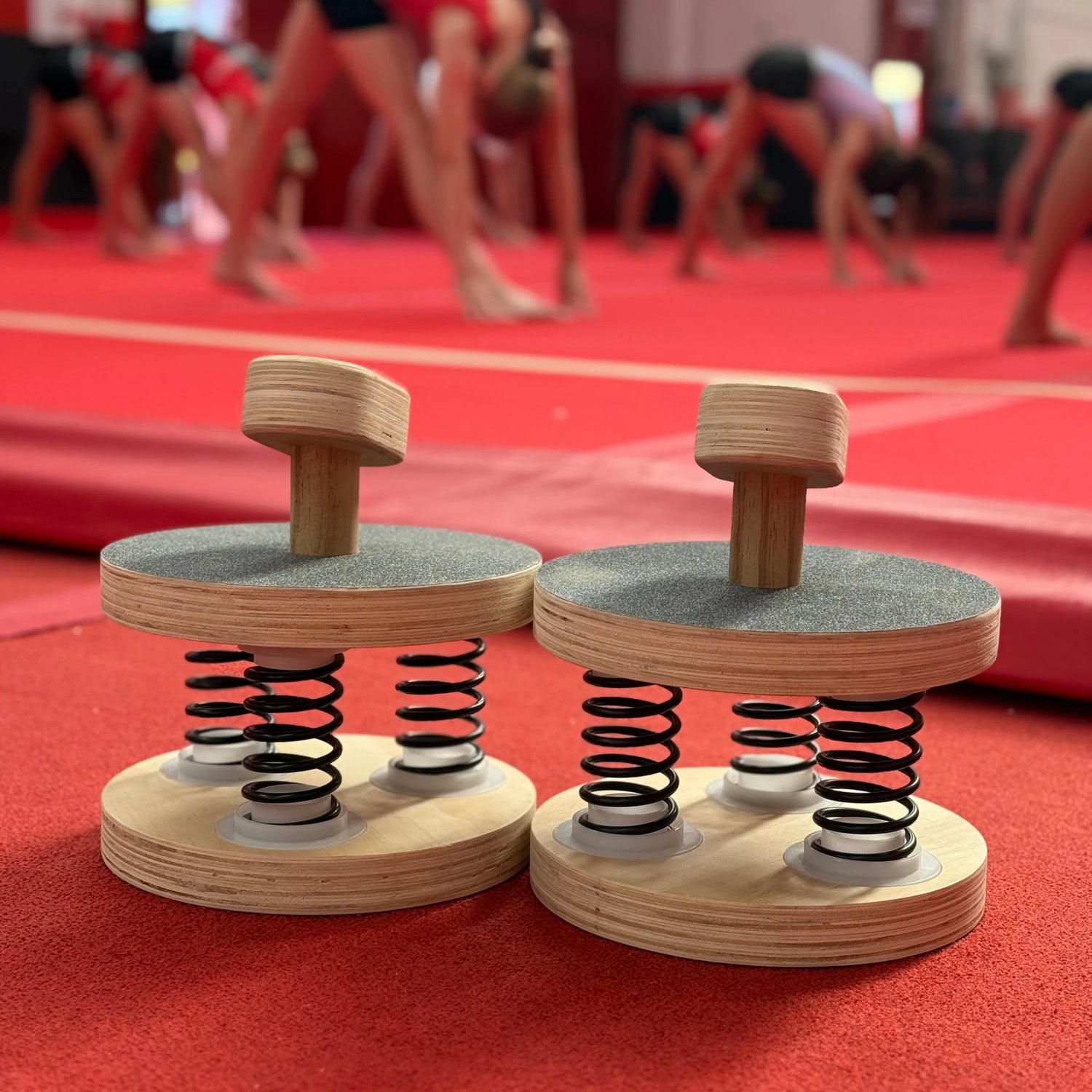
Once your child has the basics down, the right training tools can make a huge difference. Handstand wobble blocks are one of the most effective pieces of equipment for developing balance and proprioception — the body's ability to sense its own position in space.
Our Balance Addicts Handstand Wobble Blocks feature a non-slip silicone base, removable heads for easy storage, and a robust triple-spring system that mimics the instability of competition environments. They're suitable for ages 4+ and used by gymnasts at every level.
4. Watch Their Technique (Without Becoming a Coach)
You don't need to be a gymnastics expert to help your child improve. A few simple things to look out for:
- Straight body line — hips, shoulders, and ankles should be stacked vertically
- Active shoulders — arms should be pressing up through the floor, not collapsing
- Pointed toes — a small detail that builds good habits early
- Engaged core — a tight tummy prevents the banana-back shape
If you spot something, offer gentle encouragement rather than correction. Positive reinforcement goes a long way at this age.
5. Celebrate the Small Wins
Handstands take time — even experienced gymnasts spend years perfecting them. Celebrate every milestone, whether it's the first time they kick up without the wall, hold for three seconds freestanding, or nail a straight body position. Progress in gymnastics is rarely linear, and your enthusiasm as a parent is one of the most powerful motivators your child has.
6. Connect with Their Coach
If your child trains at a club, check in with their coach about what they're working on. Ask what drills are appropriate to practise at home and whether there are any movements they should avoid unsupervised. A good coach will appreciate your involvement and can point you toward the most useful home exercises for your child's current level.
Ready to Build the Perfect Home Training Setup?
From gymnastics mats to handstand wobble blocks, Balance Addicts has everything your young gymnast needs to train safely and effectively at home. Browse our Handstand Collection and give your child the tools to reach their goals.