Introduction
Gymnastics is one of the most rewarding sports a child can pursue — building strength, flexibility, coordination, and confidence from a young age. But like any physical discipline, it carries a risk of injury. As a parent, knowing what to look out for, how to reduce risk, and how to respond when something goes wrong can make all the difference to your child's long-term enjoyment of the sport.
The Most Common Gymnastics Injuries in Children
1. Wrist Pain & Sprains
Wrists take enormous load in gymnastics — from handstands to cartwheels to vaulting. Repetitive stress on developing growth plates is one of the most common causes of wrist pain in young gymnasts, sometimes called "gymnast's wrist" (distal radial epiphysitis).
Signs to watch for: persistent aching after training, swelling, or pain when bearing weight on the hands.
2. Ankle Sprains
Landing drills, tumbling, and beam work all put stress on the ankles. Sprains are common, particularly when a child is fatigued or landing on an uneven surface.
Signs to watch for: swelling, bruising, or reluctance to put weight on the foot after a session.
3. Growth Plate Injuries
Children's bones are still developing, and the growth plates (soft areas near the ends of long bones) are more vulnerable than adult bone. Overtraining or high-impact repetition can cause stress injuries here that, if ignored, may affect long-term development.
Signs to watch for: localised pain that doesn't resolve with rest, tenderness directly over a joint, or pain that worsens over weeks rather than improving.
4. Lower Back Strain
Backbends, walkovers, and repeated extension movements can strain the lower back. In more serious cases, young gymnasts can develop spondylolysis — a stress fracture in the vertebrae.
Signs to watch for: persistent lower back pain, pain that radiates into the legs, or discomfort that worsens with arching movements.
5. Shoulder Overuse
Repetitive overhead movements — particularly in bar work — can lead to shoulder impingement or rotator cuff irritation in older children and teens.
Signs to watch for: aching in the shoulder after training, reduced range of motion, or pain when raising the arm.
How to Prevent Gymnastics Injuries at Home
Prevention starts with the training environment. Here's what you can do as a parent:
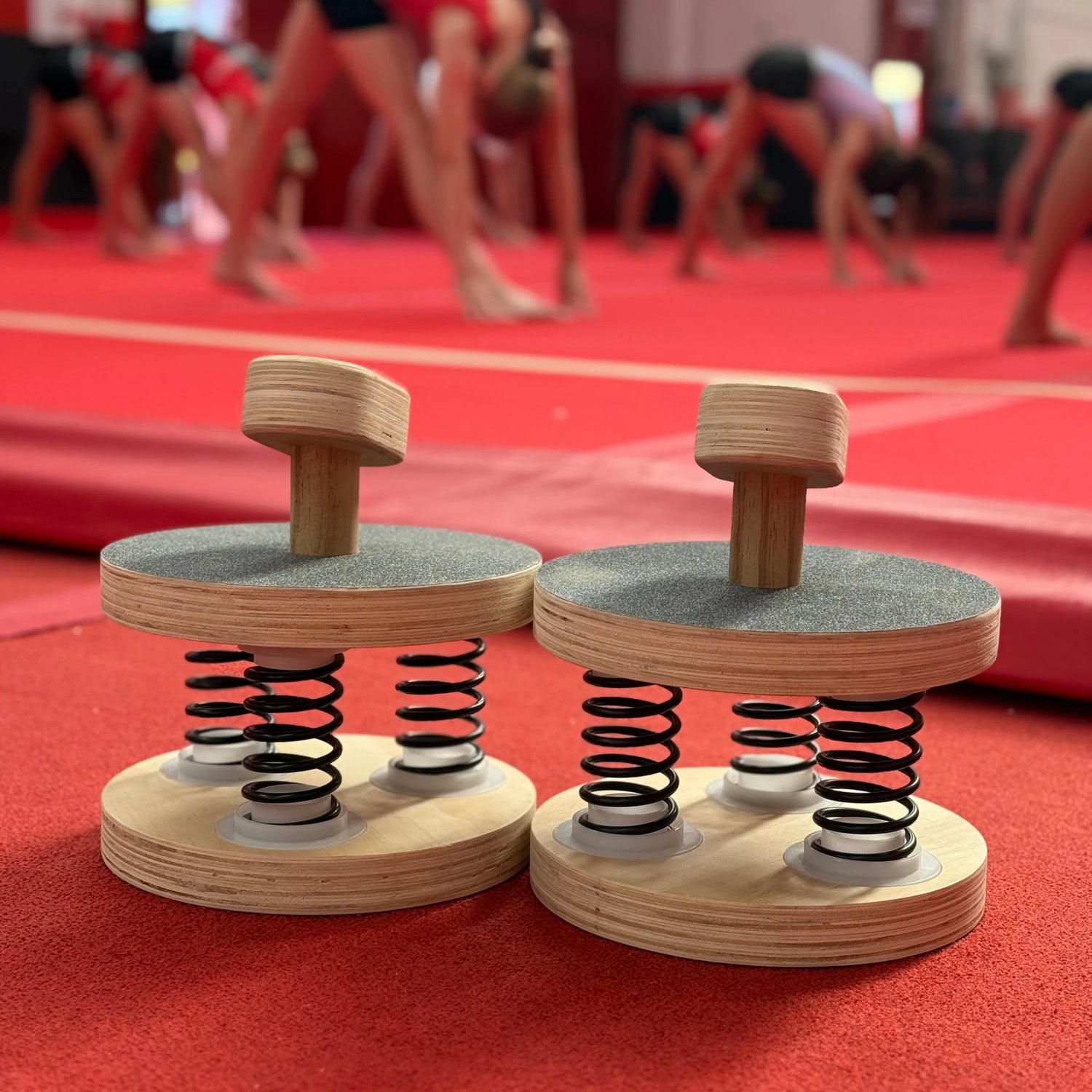
Use proper equipment. A quality gymnastics mat is non-negotiable for home practice — it cushions impact and provides a stable, non-slip surface. For handstand training specifically, handstand wobble blocks help develop wrist strength and proprioception gradually, reducing the sudden load that causes acute wrist injuries.
Don't skip the warm-up. Encourage your child to spend 5–10 minutes warming up before any home practice — light cardio, dynamic stretching, and wrist circles go a long way.
Keep sessions short. Fatigue is one of the biggest injury risk factors. 15–20 minutes of focused practice is far safer than an hour of tired repetition.
Avoid pushing through pain. Teach your child early that pain is a signal, not a challenge. "No pain, no gain" has no place in children's gymnastics.
Communicate with their coach. Make sure their club training and home practice aren't doubling up on the same high-load movements. Rest days matter.
When to See a Doctor
Not every ache needs a GP visit, but some symptoms should never be ignored:
- Pain that persists for more than a few days after rest
- Swelling, bruising, or visible deformity
- Pain that wakes your child at night
- Any pain in or around a joint in a child under 16 (potential growth plate involvement)
- A sudden "pop" or snap during training
When in doubt, get it checked. A sports physiotherapist with experience in paediatric or gymnastics injuries is often the best first port of call.
Supporting Recovery
If your child does pick up an injury, the priority is a full recovery before returning to training — not a quick return.
- Follow the PRICE method for soft tissue injuries: Protect, Rest, Ice, Compress, Elevate
- Keep your child's coach informed so they can modify training during recovery
- Use recovery time positively — visualisation, watching technique videos, and light mobility work (if cleared by a physio) can keep motivation high
- Don't rush the return. A child who returns too soon risks re-injury and longer time out overall
A Note on Training Equipment & Wrist Health
One of the most effective ways to build wrist resilience in young gymnasts is progressive loading — gradually increasing the challenge rather than jumping straight to high-impact skills. Our Balance Addicts Handstand Wobble Blocks are designed with exactly this in mind, using a triple-spring system that builds proprioception and wrist stability over time. Paired with a good mat, they're one of the best investments you can make for safe home training.
Final Thoughts
Gymnastics injuries in children are common, but most are preventable with the right environment, equipment, and approach. Stay observant, keep communication open with your child and their coach, and never dismiss persistent pain. The goal is a long, enjoyable gymnastics journey — and that starts with keeping your child healthy.