When your child falls in love with gymnastics, it's tempting to go all-in on equipment straight away. But most parents — even well-meaning ones — make a few common mistakes that end up costing more money, slowing progress, or creating safety risks at home.
Here's what to avoid, and what to buy instead.
Mistake 1: Buying a Full Gymnastics Mat Before Anything Else
Large folding gymnastics mats are bulky, expensive, and often overkill for home practice — especially for beginners. Most kids don't need a 4-metre crash mat in the living room to get started.
What to buy instead: A purpose-built Handstand Balance Mat gives your child a non-slip, cushioned surface for handstand and floor work without taking over the room. It's the right size for what they'll actually be doing at home.
Mistake 2: Skipping Handstand Blocks and Going Straight to the Floor
Many parents assume kids can just practise handstands on the floor. The problem is that flat-palm handstands put a lot of stress on young wrists and make it harder to find the right shoulder position. Bad habits formed early are hard to undo.
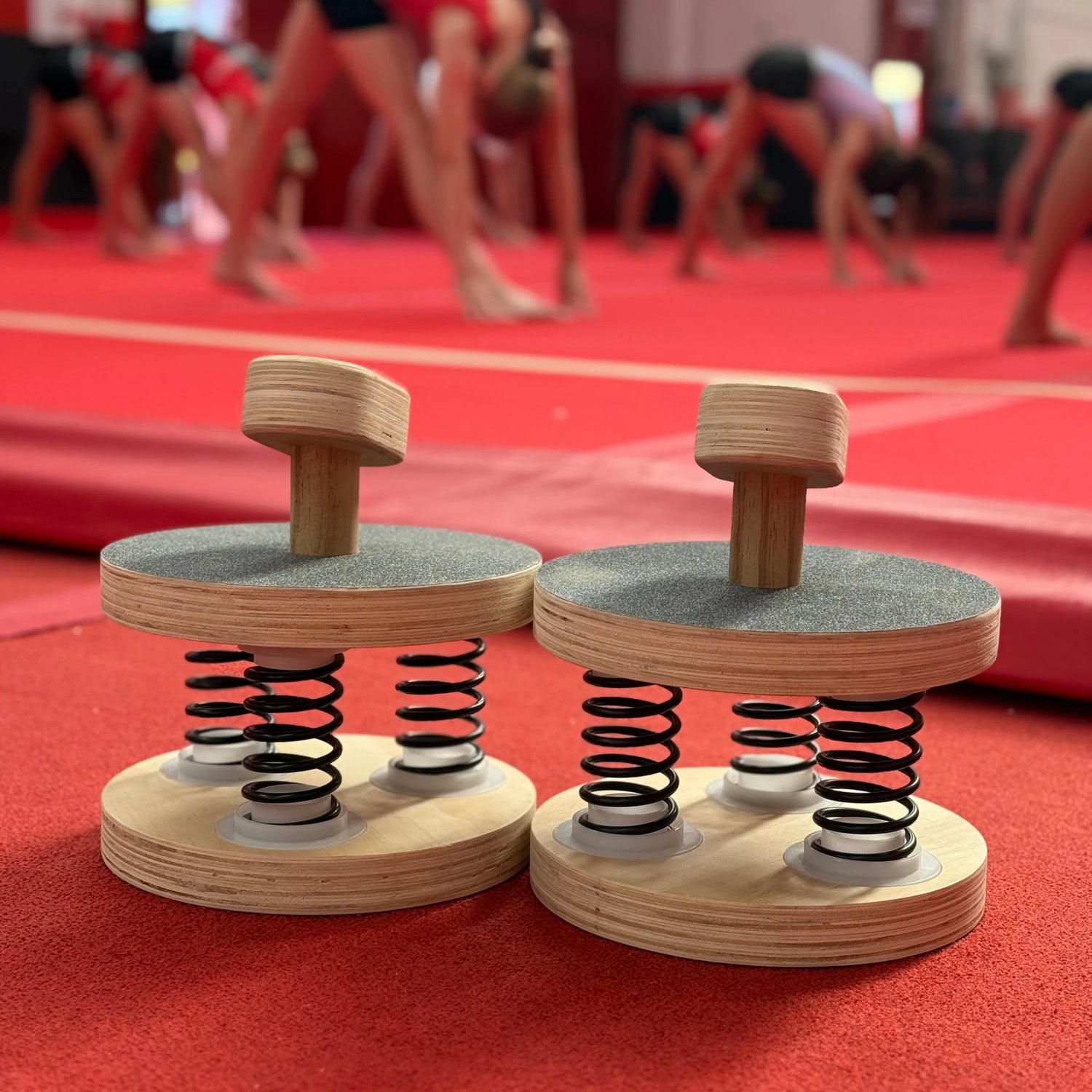
What to buy instead: Handstand Blocks elevate the hands and allow a better grip angle, protecting wrists and building proper technique from day one. If your child is ready for a challenge, Wobble Blocks add instability that develops core strength and balance simultaneously.
Mistake 3: Buying Cheap Chalk (or No Chalk at All)
Grip matters — especially on blocks, canes, and bars. Parents often skip chalk entirely or grab the cheapest block chalk they can find, which creates mess and doesn't distribute evenly.
What to buy instead: Liquid Gymnastics Chalk is clean, easy to apply, and far more parent-friendly than loose block chalk. A small bottle goes a long way and keeps your floors chalk-free.
Mistake 4: Buying Equipment That's Too Advanced Too Soon
Parallette bars and full handstand cane sets look impressive, but they're not the right starting point for most young beginners. Equipment that's too advanced can be discouraging — or worse, unsafe — if a child doesn't yet have the strength or technique to use it properly.
What to buy instead: Start with the Handstand Starter Set, which includes handstand blocks, ankle weights, and a non-slip balance base. It's everything a beginner needs, nothing they don't. Once they've built a solid foundation, Mini Handstand Canes are a natural next step.
Mistake 5: Ignoring Ankle Weights
Ankle weights are often overlooked as a "gym thing" rather than a gymnastics tool. In reality, light ankle weights are one of the best ways to help kids develop the leg tension and body awareness needed for clean lines in handstands and other skills.
What to buy instead: The Balance Addicts Gymnastics Ankle Weights are lightweight enough for young athletes and versatile enough to be used across a wide range of conditioning exercises — not just gymnastics.
Mistake 6: Buying Everything at Once
It's easy to get carried away and order a full kit before your child has even decided if they love it. Equipment that sits unused is money wasted.
What to buy instead: Start small and build up. A mat, a set of handstand blocks, and some chalk is genuinely all most kids need for the first few months. Once you can see their commitment and skill level, you'll have a much clearer idea of what to add next.
The Bottom Line
The best gymnastics equipment for kids isn't the most expensive or the most impressive-looking — it's the equipment that matches where they are right now and helps them progress safely. Start with the basics, buy quality over quantity, and let their enthusiasm guide what comes next.
Not sure what's right for your child's age or level? Browse our full range or get in touch — we're happy to point you in the right direction.