What Is Proprioception?
Proprioception is your body's ability to sense its own position, movement, and force in space — without relying on sight. It's sometimes called your "sixth sense", and it's the reason you can walk in the dark, catch yourself when you stumble, or hold a handstand without staring at your hands.
Tiny receptors in your muscles, tendons, and joints constantly send signals to your brain about where your limbs are and how they're moving. When this system is well-trained, your movements become more precise, your reactions faster, and your risk of injury lower.
Why Proprioception Matters for Athletes
Whether you're a gymnast, a runner, a martial artist, or simply someone who trains at home, proprioception underpins almost every physical skill you develop. Here's why it deserves dedicated attention:
- Injury prevention: Poor proprioception is one of the leading causes of ankle sprains, knee injuries, and falls. Training it strengthens the neuromuscular pathways that protect your joints.
- Better balance and coordination: Athletes with strong proprioceptive awareness move more efficiently and with greater control.
- Faster recovery: After an injury, proprioceptive training is a core part of rehabilitation — it helps restore the joint awareness that trauma disrupts.
- Skill transfer: Improved body awareness carries over into every sport and movement discipline, from gymnastics to yoga to weightlifting.
How to Train Proprioception at Home
The good news: you don't need a physio clinic or specialist equipment to train proprioception effectively. Unstable surfaces, controlled loading, and progressive challenges are the key ingredients — and you can build all of these into a home training routine.
1. Unstable Surface Training
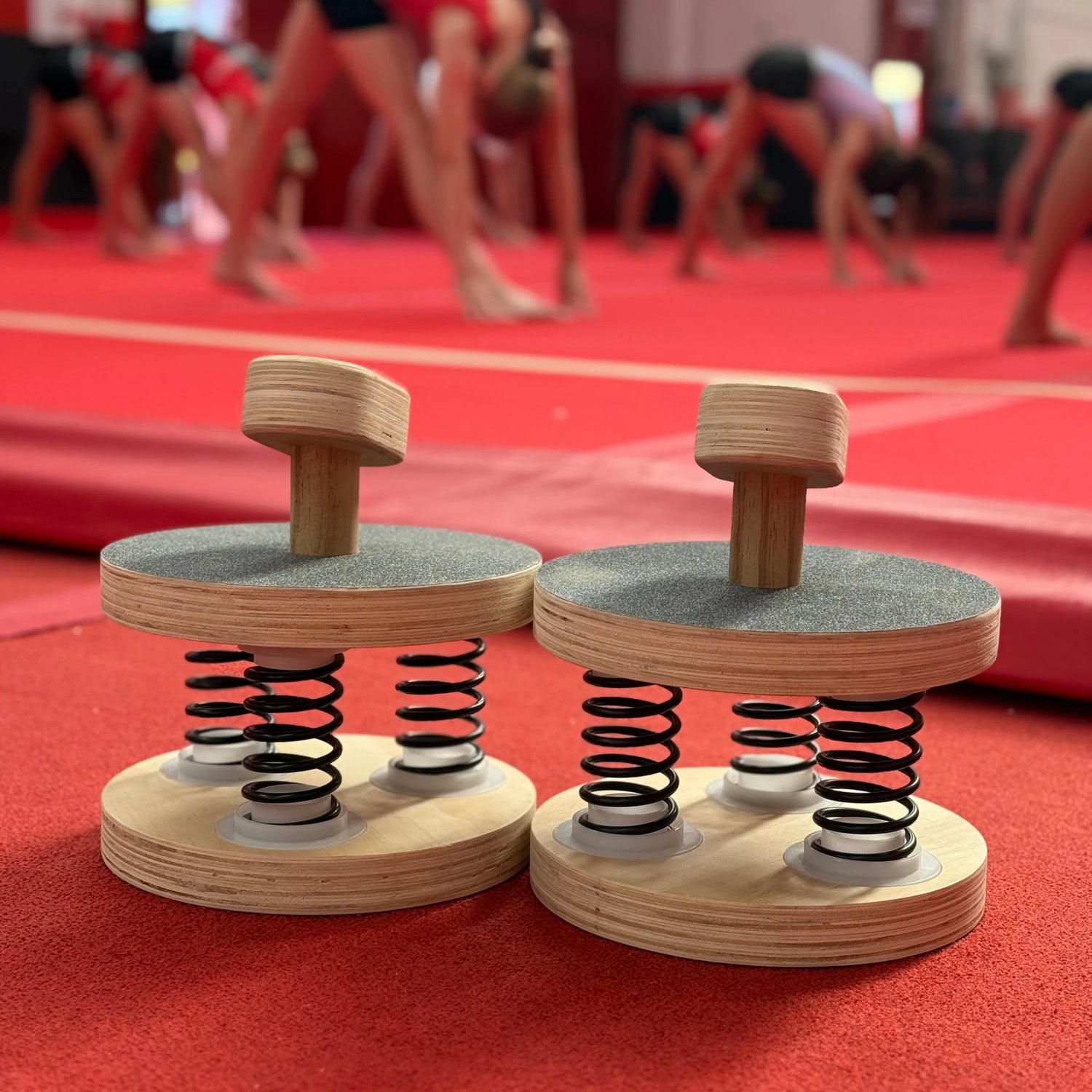
Training on an unstable surface forces your body to constantly micro-adjust, activating the proprioceptive system far more than flat-ground exercises. A wobble block is one of the most effective tools for this — it introduces controlled instability that challenges your ankles, knees, and hips simultaneously.
Start with simple standing holds on the wobble block, then progress to single-leg stands, squats, and eventually dynamic movements like catches or press-to-handstand drills.
2. Balance Mat Work
A balance mat provides a softer, more forgiving surface — ideal for beginners or for warming up the proprioceptive system before more demanding work. Use it for standing poses, single-leg exercises, or as a landing surface to train reactive balance.
3. Loaded Balance Training
Adding light resistance to balance exercises increases the demand on your proprioceptive system. Ankle weights are a simple and effective way to do this — they increase the load on your lower limbs during single-leg work, making your stabilising muscles and joint receptors work harder.
Try single-leg deadlifts, lateral leg raises, or slow controlled squats with ankle weights to layer proprioceptive challenge with strength work.
4. Eyes-Closed Training
Removing visual input forces your body to rely entirely on proprioceptive feedback. Start with simple exercises you can already do well — like a two-legged balance hold — and close your eyes. The increased difficulty will be immediately apparent. Progress gradually and always train in a safe environment.
5. Reactive and Dynamic Drills
Proprioception isn't just about static balance — it's also about how quickly your body responds to unexpected changes. Incorporate reactive drills like catching a ball while standing on one leg, or performing balance holds on a wobble block while a partner introduces light perturbations.
A Simple Proprioception Training Routine
Here's a beginner-friendly routine you can do 3–4 times per week:
- Two-legged wobble block hold — 3 × 30 seconds
- Single-leg hold — 3 × 20 seconds each side
- Single-leg squat (bodyweight) — 3 × 8 each side
- Ankle weight lateral raises — 3 × 12 each side
- Eyes-closed two-legged hold — 3 × 20 seconds
As you progress, increase the duration of holds, add ankle weights to unstable surface work, or introduce dynamic elements like arm movements during single-leg stands.
How Long Until You See Results?
Proprioceptive improvements can come quickly — many people notice better balance and stability within 2–4 weeks of consistent training. The neuromuscular adaptations that drive these gains are among the fastest in the body, which makes proprioception training one of the highest-return investments you can make in your physical development.
Final Thoughts
Proprioception is one of the most overlooked components of athletic training — but it's foundational to everything from injury prevention to elite skill development. The tools are simple, the time investment is modest, and the payoff is significant. Start with a wobble block, a balance mat, and a pair of ankle weights, and build from there.